- Yes, Collaborative Divorce is a form of Alternative Dispute Resolution (ADR).
- You and your spouse each have your own collaboratively trained lawyer to provide legal advice and help negotiate an agreement.
- You work toward resolving your divorce outside of court rather than asking a judge to make decisions for your family.
- You maintain more control over the outcome because agreements are reached through negotiation rather than imposed by a court.
- The process encourages practical problem-solving and can help reduce unnecessary conflict between you and your spouse.
If you are considering divorce in Alberta, you may hear the term Alternative Dispute Resolution, or ADR.
ADR refers to ways to resolve legal disputes without relying on traditional courtroom litigation. Mediation is probably the form of ADR that most people recognize, but it is certainly not the only option.
Collaborative Divorce is also a form of ADR.
If maintaining control over your own future is important to you, Collaborative Divorce may be worth considering.
How Does Collaborative Divorce Work?
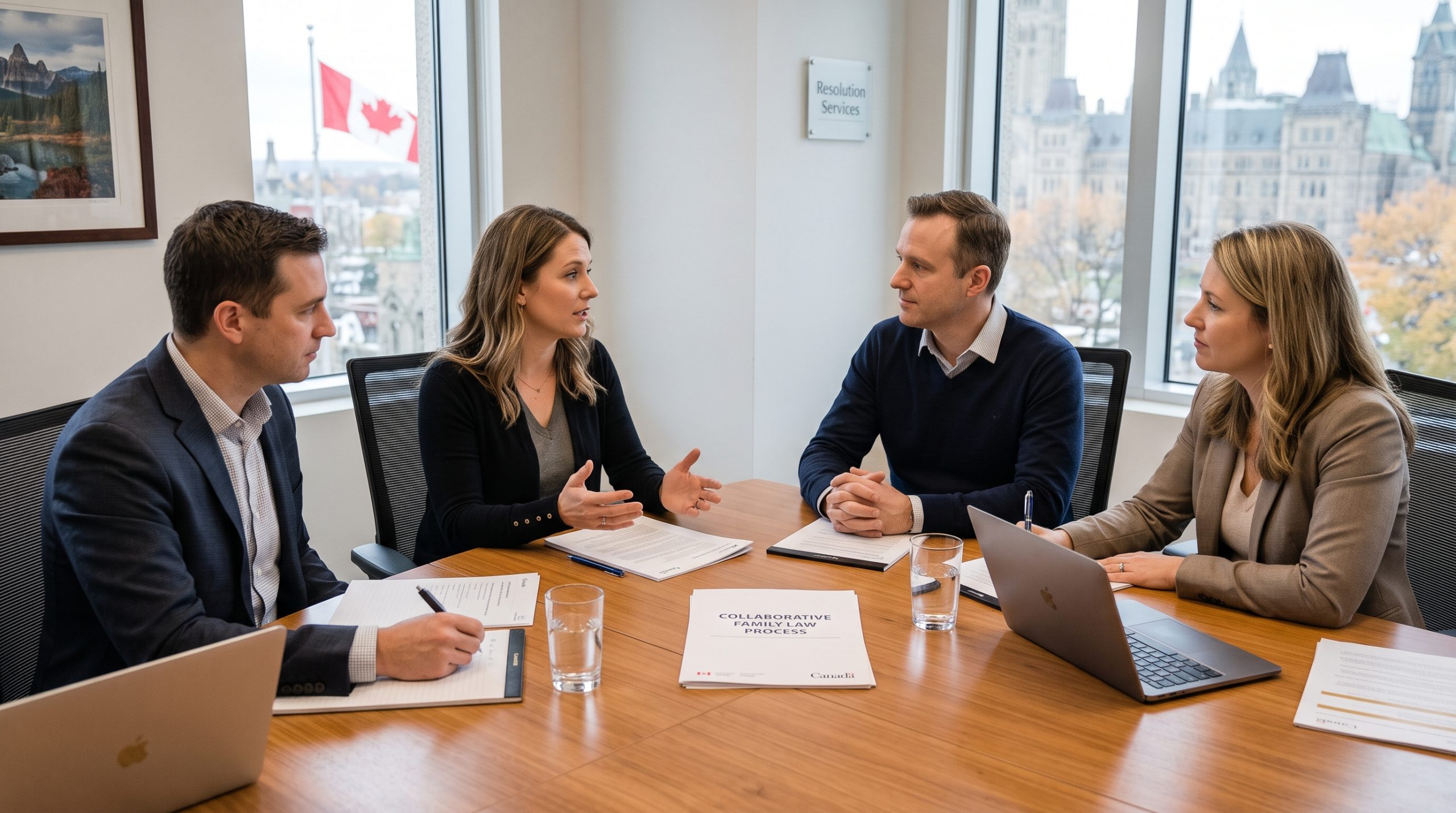
In Collaborative Divorce, you and your spouse each retain your own collaboratively trained lawyer.
Your lawyer represents you. Your spouse’s lawyer represents them.
But this process differs from traditional litigation: everyone agrees the goal is settlement, not court.
You, your spouse, and your lawyers sign a Participation Agreement committing to work through the issues outside of court.
From there, you can address the same issues that might otherwise end up before a judge, including:
- Parenting arrangements
- Child support
- Spousal support
- Property division
- Debt
- The family home
- Pensions and retirement assets
You are still receiving independent legal advice. The difference is that your lawyer is helping you solve problems rather than preparing to fight those problems in court.
Why Does the Commitment to Stay Out of Court Matter?
That commitment changes the dynamics of the negotiation.
In traditional negotiations, there can always be an underlying threat: “If you don’t agree with me, I’ll take you to court.”
That threat disappears in the Collaborative Divorce process.
You cannot use court as leverage every time negotiations become difficult. Instead, everyone has to return to the table and ask: How can we solve this?
That encourages interest-based negotiation.
Rather than becoming stuck on a position such as, “I need to keep the house,” you can begin discussing why keeping the house matters. Perhaps you want stability for your children. Perhaps you’re worried about finding affordable housing.
Once everyone understands the underlying concern, you often have more than one possible solution.
Collaborative Divorce Can Involve a Team
Another benefit of Collaborative Divorce is that you don’t have to ask lawyers to solve every problem.
If your finances are complicated, you may use a financial neutral.
If communication or emotions are preventing productive discussions, a divorce coach or mental health professional may help.
If you’re struggling with parenting arrangements, a Family Specialist can provide guidance.
Use the professional best equipped to address the specific problem.
That can make the process more efficient and help keep your lawyers focused on legal issues.
How Is Collaborative Divorce Different From Mediation?
Both are forms of ADR, but they have different structures.
In Mediation, one neutral Mediator helps you and your spouse negotiate. The Mediator does not represent either person, and while they can provide information regarding the law, they cannot provide legal advice.
In Collaborative Divorce, you each have your own lawyer actively involved throughout the process.
That additional support can be valuable when your issues are complicated or when you want independent legal advice available during negotiations.
The Goal Is Control, Not Winning
One of the biggest advantages of ADR is that you keep control of the outcome.
If you litigate, you eventually ask a judge to make decisions for you. In Collaborative Divorce, nothing is settled unless you and your spouse agree to it. That doesn’t mean you get everything you want. Neither does your spouse.
It means you have an opportunity to create an agreement that considers your legal rights while also recognizing the practical realities of your family. In my experience, clients are generally more satisfied when they have helped shape their own future rather than having it decided for them by a third party.
FAQs
Yes. Collaborative Divorce is an Alternative Dispute Resolution process designed to help you resolve family law issues outside traditional litigation.
Yes. You and your spouse each have your own collaboratively trained lawyer providing independent legal advice and representing your interests throughout the process.
If you end the Collaborative process and decide to litigate, your Collaborative Lawyers must withdraw. You would then retain different lawyers to represent you in court.

Pierre Boileau
With over 35 years of practice Pierre Boileau, K.C. has gained experience as a Mediator, Collaborative Family Lawyer, Litigator and now as an Arbitrator. Pierre’s extensive experience has shown him that client satisfaction is maximized when clients have control over their own future. This can best be achieved through interest based negotiation. Only as a last resort, should litigation be considered. When necessary, Pierre relies upon his vast court experience and training.
Pierre remains committed to continuing to practice at a high level with particular care, interest,and sound judgment. He doesn’t shy away from particularly challenging cases. Pierre’s greatest reward comes from the satisfaction of assisting clients through one of the most challenging experiences of their lives.